Tibet’s high-plateau landscapes
Tibet sits on a plateau averaging more than 4,000 meters (about 13,000 feet), with huge skies, monasteries and Himalayan views. Lhasa’s Potala Palace, the former winter palace of the Dalai Lamas, is the classic first stop.
Foreign visitors need a Tibet Travel Permit on top of a China visa, and it is arranged through a licensed tour operator with a guide. Plan for the altitude, too: go slowly the first few days.
Beijing’s ancient city: the Forbidden City and hutongs
The Forbidden City was the imperial palace of the Ming and Qing dynasties for nearly 500 years and is now the Palace Museum. Tickets are sold online in advance with your passport number, and daily numbers are capped, so book early.
Afterward, wander the hutongs, Beijing’s old lanes of courtyard homes, around areas like Nanluoguxiang and the Drum and Bell Towers.
The Terracotta Warriors in Xi’an
Farmers digging a well in 1974 found the first pieces of this army of life-size clay soldiers, built to guard the tomb of Qin Shi Huang, China’s first emperor. Thousands of figures have been found, and no two faces are quite alike.
The site is outside Xi’an, about an hour away. Xi’an also has its intact city wall, which you can walk or bike along the top.
Modern Shanghai
Stand on the Bund, the riverfront row of historic buildings, and look across the Huangpu River at the Pudong skyline, including Shanghai Tower, China’s tallest building. It’s best right after dark when the lights come on.
Balance the skyline with the older side of the city: Yu Garden, the leafy streets of the former French Concession, and a soup dumpling (xiaolongbao) stop.
Dinner at Tai’an Table, Shanghai
If you want one blowout meal, Tai’an Table in Shanghai’s Changning district is the only restaurant in the 2026 Michelin Guide for Shanghai, Jiangsu and Zhejiang with three stars, and it has held three stars for five years in a row. It’s an intimate, tasting-menu-only restaurant built around a chef’s counter.
Seats are few, so reserve well ahead. On a budget? The same Michelin guide lists dozens of Bib Gourmand spots for great local food at everyday prices.
Zhangjiajie’s floating pillars
In Hunan province, Zhangjiajie National Forest Park is part of the Wulingyuan Scenic Area, a UNESCO World Heritage Site with thousands of sandstone pillars rising out of the forest. The peaks are widely credited as an inspiration for the floating mountains in the movie Avatar.
Give it at least two days. The park is big, and the Bailong elevator and cable cars save a lot of climbing.
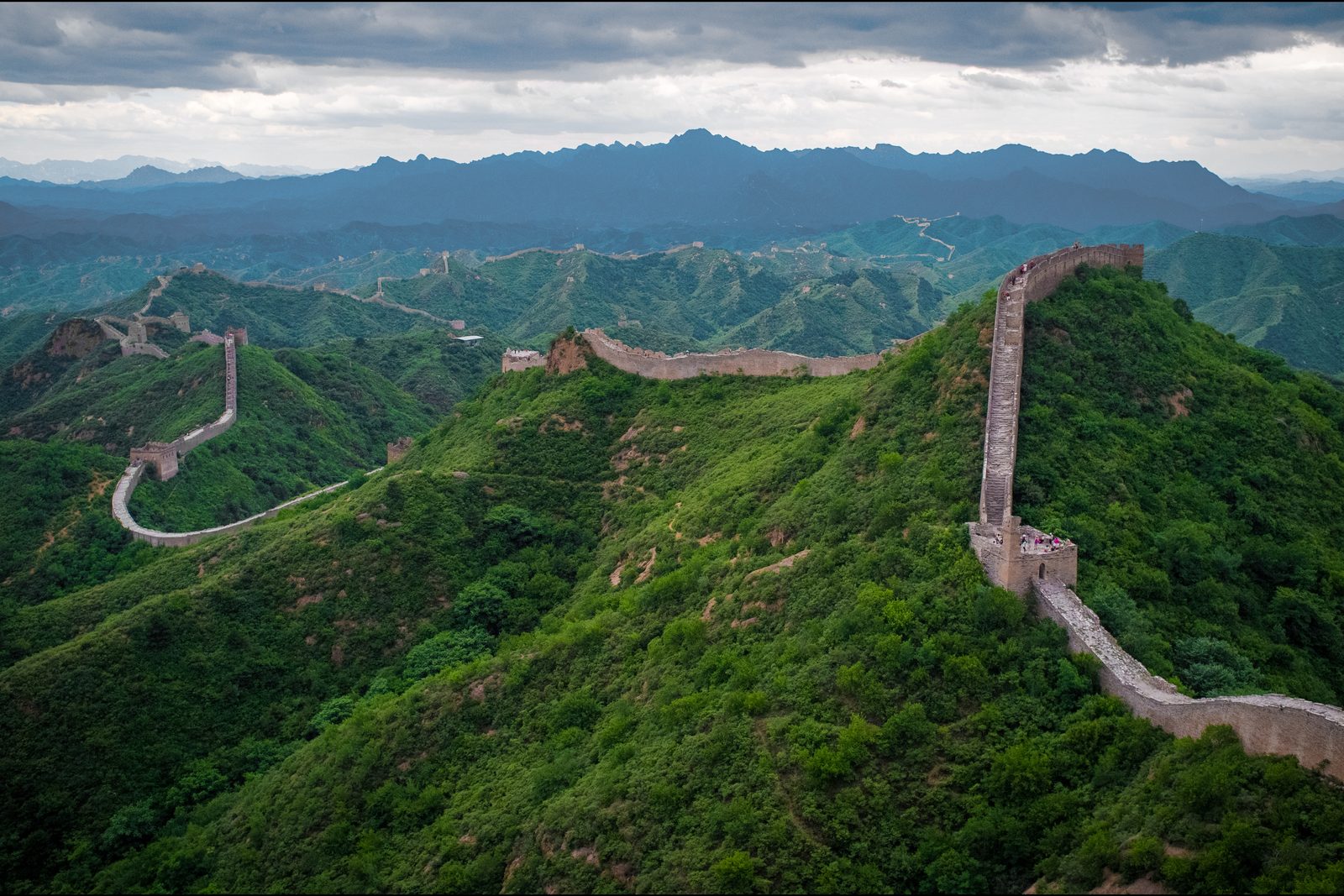
The Great Wall at Mutianyu or Jinshanling
Skip the busiest section at Badaling. Mutianyu, about two hours from Beijing, is restored, green and family friendly, with a cable car up and a toboggan ride down.
Jinshanling, farther out in Hebei province, is partly restored and partly wild, with great hiking and watchtower views. Wear real shoes: the steps are steep and uneven.
Guilin and the Li River
In Guangxi, the Li River winds between steep limestone karst peaks. The scenery near Xingping is the view printed on the back of China’s 20-yuan note.
Take a river cruise or a bamboo raft between Guilin and Yangshuo, then base yourself in Yangshuo for biking past the rice fields.
Jiuzhaigou Valley
Jiuzhaigou, in northern Sichuan, is a UNESCO-listed valley of turquoise lakes, waterfalls and forests. The water is so clear you can see fallen trees on the lake beds.
Parts of the park were damaged by a 2017 earthquake and later reopened. Visitor numbers are capped, so buy tickets ahead, and fall is the most colorful season.
Zhangye Danxia’s rainbow mountains
In Gansu province, the Zhangye Danxia landform has ridges striped in red, orange, yellow and green, made by layers of sandstone and minerals laid down over millions of years.
Go in late afternoon when the low sun makes the colors glow, and stick to the boardwalks and viewing platforms.
First-timer tips: visas, apps and coverage
- Visa: Most US travelers need a Chinese tourist visa before they go. If you’re passing through China to a third country, you may qualify for visa-free transit. Rules change, so check the Chinese embassy and the US State Department sites before you book.
- Tibet: Needs a separate Tibet Travel Permit through a licensed tour operator. You can’t arrange it on your own.
- Payments and apps: China runs on mobile payments. Set up Alipay or WeChat Pay with your card before you go, and check whether your usual apps and sites work there.
- Distances: China is huge. Use high-speed trains between big cities and fly to far-off spots like Zhangye or Jiuzhaigou.
- Insurance: US health plans often cover little or nothing in China, and places like Tibet, Jiuzhaigou and Zhangye are a long way from big hospitals. Look for a plan with solid emergency medical and medical evacuation limits. Here’s what to look for in travel insurance.
Ready to compare?
Compare plans with strong medical and evacuation coverage for your China trip.
I get paid if you buy through this link. The price you pay is the same.
Photo: “The Great Wall of China at Jinshanling” by Severin.stalder, Wikimedia Commons, CC BY-SA 3.0, cropped. This guide is general information, not travel, legal or insurance advice. Visa, permit and park rules change, so check official sources before you go. Updated October 2026.
